
Sanpete County Court Records After Jail Arrest
After a Sanpete County jail arrest, two record tracks may exist at the same time. The jail booking record starts at the Sanpete County Jail / Sanpete County Sheriff's Complex in Manti. It is created when the person is booked, and it may appear later in the county's weekly booking-report PDFs. The court record starts when a prosecutor files charges, or when a warrant, citation, or existing case is already open. That court file becomes the better source for case number, filed charge, hearing history, disposition, warrant action, bond order, and sentence.
The difference matters because a booking charge is not always the charge that moves forward in court. Law enforcement may book a person on one offense, then the Sanpete County Attorney or another prosecutor may decline, amend, reduce, enhance, or replace the charge before filing. For current custody, booking details, and weekly jail reports, use Sanpete County jail inmate records. For booking-photo access, use the separate Sanpete County jail mugshots channel. Court records after a Sanpete County arrest should be read as the filed case, not as proof of a final result.
The official Utah Courts records overview gives the broad access rules for case records. The Utah Courts records page is a useful starting point for what is public, what may be restricted, and which records may need clerk access rather than online search.
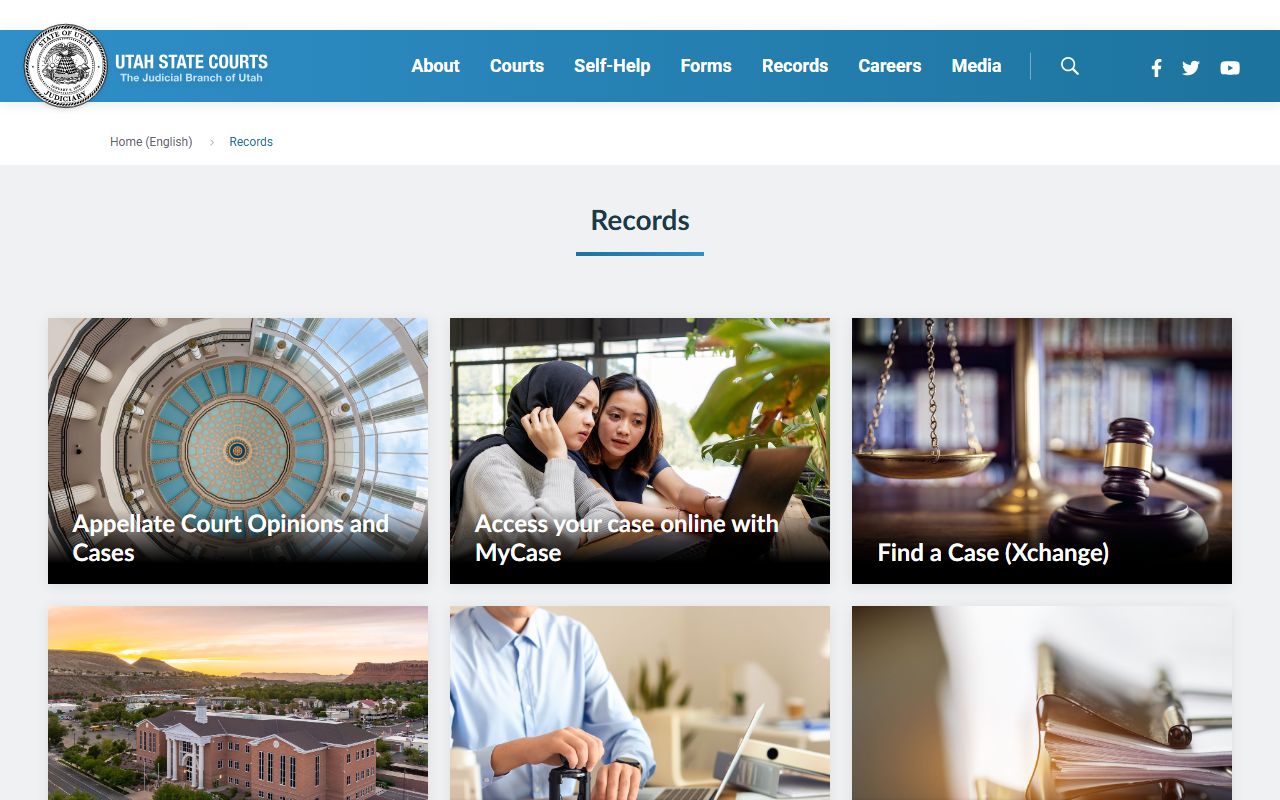
That state court source helps separate court access from sheriff GRAMA requests, which are used for jail and law-enforcement records rather than the court's own case files.
Sanpete Court Records in Xchange
Utah Courts Xchange is the statewide case-search service for district and justice court records. In Sanpete County court records after a jail arrest, Xchange is the main online path for filed charges, court dates, case numbers, docket events, dispositions, and case history. The official Xchange page says the service provides access to district and justice court case information. Some use may require an account or payment, and sealed or private records are not public.
The Utah Courts Xchange information page describes the case-search service used for Sanpete County criminal cases after arrest.
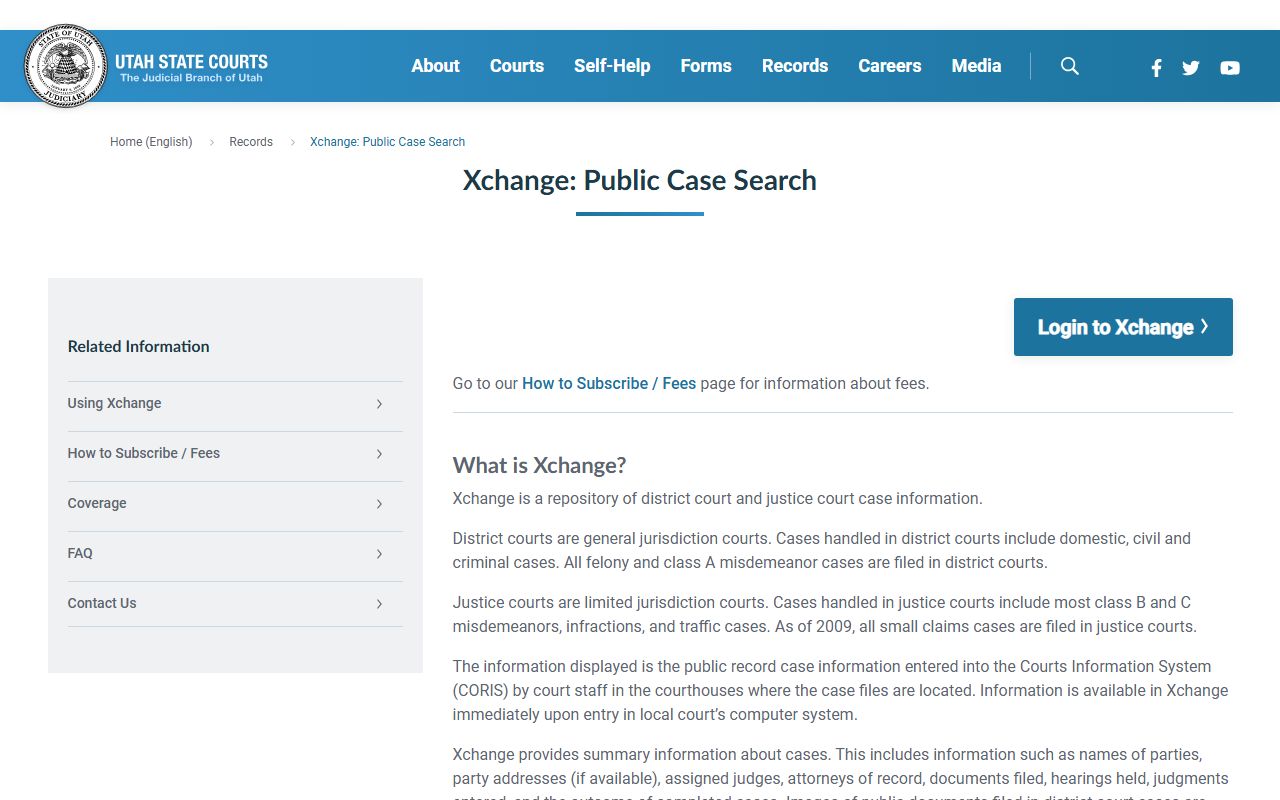
When a person is newly booked, the jail report may appear before the court case is filed, so a later Xchange check may be needed after prosecutor review.
| Field Label | Type | Required | Notes |
|---|---|---|---|
| Case search / Xchange access | Web portal | Account or payment may apply | Official Utah Courts public case-search service. |
| Defendant or party name | Search criterion | Varies by search mode | Used to locate criminal cases by person. |
| Case number | Search criterion | Varies by search mode | Best field when a citation, jail note, or court notice gives the number. |
| Court / county | Filter | Varies | Use Sanpete County, Sixth District, or the local justice court as applicable. |
| Date range | Filter | Unspecified | Helpful when a name is common or the arrest date is known. |
| Login/payment | Access step | Yes for some functions | Court clerks remain a channel for records not visible online. |
From Booking to Filed Charge
The arrest-to-court path in Sanpete County is a sequence, not one record. First, the person is arrested by a sheriff deputy, municipal officer, state officer, or on a warrant. If continued detention is required, the person is booked at the county jail. The booking report may list arrest or booking charge text. Next, the person appears before a magistrate or judge for rights, initial case handling, and release conditions. The Sanpete County Attorney then reviews the referral for county-level criminal matters, while some municipal cases may involve a city prosecutor.
- Confirm the jail booking date or report week from the county booking reports if the arrest is recent.
- Search Utah Courts Xchange by defendant name, case number, court, county, or date range when those fields are available.
- Open the case record and compare each filed charge to the jail booking charge text.
- Check hearing dates, bond orders, warrants, charge amendments, dismissal entries, plea entries, and sentencing events.
- Contact the clerk for older, sealed, restricted, or document-level access that is not available through the public portal.
Felonies and more serious misdemeanors often proceed in district court, while lesser offenses may be handled in justice court depending on the jurisdiction. Court records after a Sanpete County arrest may also begin from a citation or warrant rather than a new jail booking, so a missing jail entry does not always mean no court case exists.
Sanpete Arrest Charging Records
A charging document is the filing that turns an arrest referral into a formal court case. Utah criminal cases may use a complaint, an information, or an indictment, depending on the case type and process. The research did not locate a Sanpete County charging-policy manual, so the practical rule is to treat the court case filing as the controlling record once it exists.
| Document | Who Files It | Common Use | Why It Matters |
|---|---|---|---|
| Complaint | Officer or prosecutor | Often starts misdemeanor or initial criminal cases | May state the first filed charge after arrest. |
| Information | Prosecutor | Common for many felony filings | Shows the prosecutor's formal charge choice. |
| Indictment | Grand jury process | Less common, usually serious cases | Starts a case through grand-jury action. |
The Sanpete County Attorney page identifies the local prosecutor's office and its role in county criminal matters.
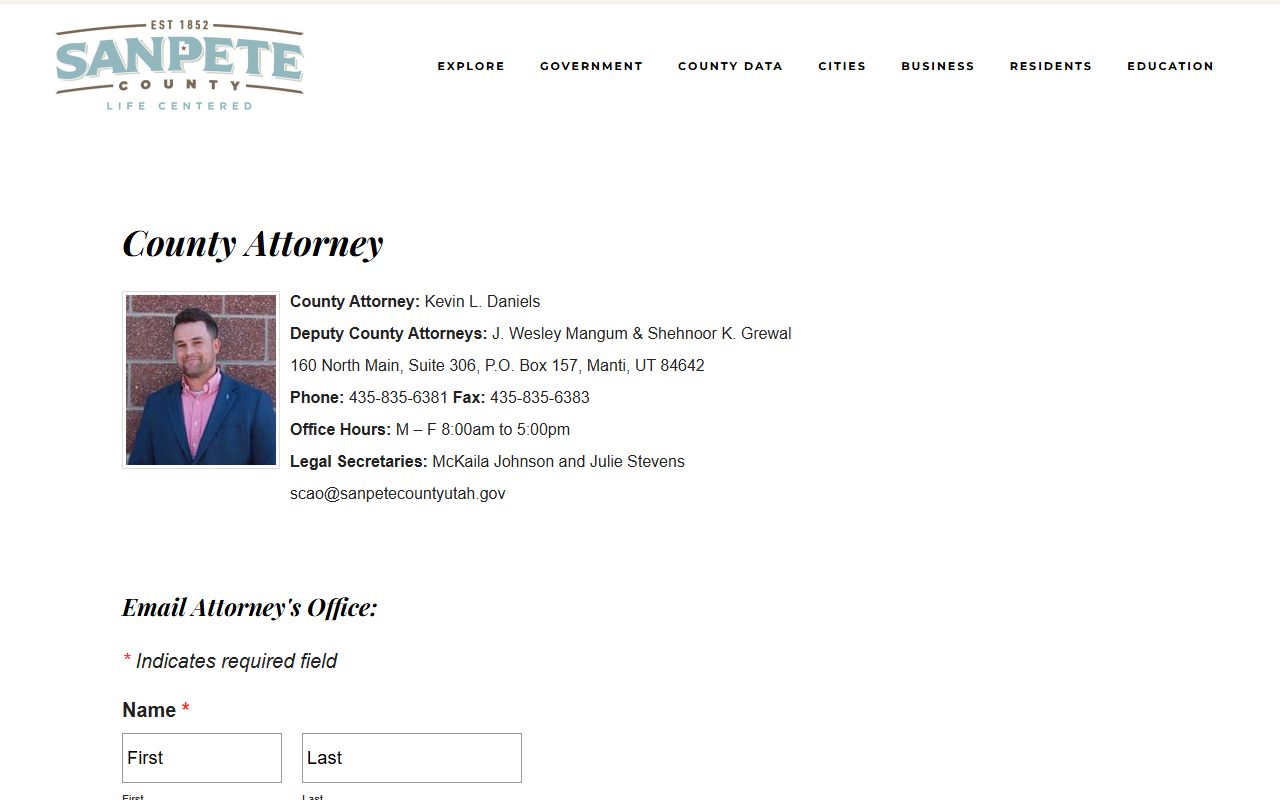
For Sanpete County court records after arrest, that office is the local charging authority for county-level prosecutions, while the court record remains the place to read filed case activity.
Sanpete Court Charge Status
Charge status terms show where the case stands. They also help avoid a common mistake: treating an arrest as if it were a conviction. A charge can remain pending for a time, change by amendment, drop out of the case, or end in conviction after a plea or finding. The jail report is not the final status source. The court record after the arrest controls the case stage.
| Status | What It Means | What to Check Next |
|---|---|---|
| Pending | The charge is filed and not yet resolved. | Review the next hearing and bond conditions. |
| Amended or reduced | The prosecutor or court record changed the original filed charge. | Compare the current charge to the booking charge. |
| Dismissed | The charge no longer remains active in that case. | Check whether other counts or related cases remain. |
| Convicted | A plea or court finding resulted in guilt on that charge. | Read sentencing, probation, jail, or prison terms. |
| Warrant active | The court may have issued an arrest or bench warrant. | Contact the court or an attorney before appearing in person. |
Bond Orders After Arrest
Bond and release conditions can start from a warrant, bail schedule, magistrate order, or first-appearance decision. The Sanpete jail page states that bail can be posted at the jail, but the research did not locate a full Sanpete fee schedule, card surcharge rule, cashier's-check rule, or 24-hour bond desk policy. Before travel, call the Sanpete County Jail at 435-835-2191 to confirm the current amount, accepted payment method, and whether any hold prevents release.
| Bond Type | How It Works |
|---|---|
| Cash bond | Money is paid directly through the authorized channel under the court or warrant order. |
| Surety bond | A licensed bail agent posts bond for a fee when the court permits that form. |
| PR / own recognizance | The person is released on a promise to appear, sometimes with conditions. |
| No-bond hold | Release is blocked by a judge's order, warrant, detainer, probation/parole hold, immigration issue, or another agency hold. |
Bond records can appear in the court case, while the jail can confirm whether the person is currently eligible for release. If the court changes a bond order, the jail booking report may not reflect that change right away.
Warrants After Sanpete Arrest
No official Sanpete County Sheriff active-warrant search page was located in the county materials inspected. Warrant questions therefore use a fallback path: call the Sheriff's Office or jail, check the relevant Utah Courts case record, contact the issuing court clerk, or work through an attorney. A person should use caution before appearing at a law-enforcement office when an active warrant may lead to arrest.
Common warrant types include arrest warrants for new cases, bench warrants after failure to appear, fugitive or hold warrants from another jurisdiction, and probation or parole warrants. The court record may show the issuing court, case number, warrant type, issue date, underlying charge, bond amount, no-bond status, and warrant status. A public-record request may help with closed or non-sensitive material, but active law-enforcement records can be restricted.
Charges and Convictions Compared
Sanpete County court records after a jail arrest can include accusations and final outcomes in the same case history. A charge is an allegation. A conviction is the result of a guilty plea, no-contest plea where accepted, or court finding. Dismissal means that count is no longer pending, but it does not erase every record automatically.
| Point | Charge | Conviction |
|---|---|---|
| Case stage | Accusation filed in court | Final guilt result on a count |
| Proof level | Begins from probable cause or filing basis | Requires plea or proof beyond a reasonable doubt |
| Public meaning | Not proof that the person committed the offense | Can support sentence, probation, jail, or prison custody |
Sealed and Expunged Records
Utah GRAMA and court rules allow public access to many records, but not all records stay public. Juvenile matters, sealed cases, private records, protected law-enforcement records, and some sensitive materials can be withheld. Utah's expungement chapter, Utah Code Title 77 Chapter 40A, provides the record-clearing framework for eligible criminal records. Eligibility depends on the record and case outcome, so the court record and any agency-held record must be handled through the proper process.
| Point | Sealed | Expunged |
|---|---|---|
| Public view | Hidden or restricted from normal public access. | Cleared under Utah's expungement process when eligible. |
| Agencies | Some official access may remain under law. | Agency handling depends on the expungement order and statute. |
| Best route | Check the court order and clerk access rules. | Use Utah expungement law and court procedures. |
Important: Court records, jail records, and criminal-history reports have different access rules and must be corrected through the office that holds each record.
GRAMA and Court Limits
Utah GRAMA gives the public a right to inspect public records, subject to private, controlled, protected, and restricted categories. The main GRAMA sections for Sanpete arrest-related records are Utah Code 63G-2-201 for access rights, 63G-2-203 for fees, 63G-2-204 for agency response timing, and 63G-2-305 for protected records. GRAMA helps with sheriff and jail records, but court records use court access channels and court rules.
Statewide criminal-history records are separate from the jail booking report and the court docket. They are not a substitute for reading the Sanpete County court case after a jail arrest. If a person was sentenced to state prison, the Utah Department of Corrections offender search becomes the custody locator after transfer, while the court record still shows the conviction and sentence that led to the commitment.